

Quick Summary
- The core rollator vs walker distinction is motion: a pick-up walker is lifted with every step, while a rollator rolls on four wheels and is slowed with hand brakes.
- A two-wheeled walker sits between these extremes, letting the frame glide on front wheels while rear tips drag naturally for speed control.
- Device choice depends on your balance, strength, fatigue level, home layout, and any medical instructions about weight-bearing on a limb.
- Always lock the rollator’s parking brakes before sitting on its built-in seat.
- A physical therapist or occupational therapist can assess your gait and fit any walking aid to your body and environment safely.
The word “walker” describes three distinct mobility aids: a lightweight pick-up frame, a two-wheeled walker, and a four-wheel rollator with hand brakes. Each offers different stability and fatigue management, and picking the wrong type after a fall, surgery, or a worsening joint problem can make daily tasks harder or raise your fall risk. This article covers how the three devices differ, what personal and medical factors matter most in selecting one, and when to involve a physical therapist in the decision.
Understanding the rollator vs walker difference
The rollator vs walker distinction comes down to movement mechanics: a pick-up walker is lifted with every step, a two-wheeled walker glides on front wheels with dragging rear tips, and a rollator rolls on four wheels controlled by hand brakes. Each device suits a specific level of balance, strength, and endurance.
A pick-up walker, sometimes called a standard walking frame, is a rigid four-legged frame with no wheels. The user lifts the entire frame forward with every step, places it ahead, and then steps toward it. The pick-up walker creates a stable, wide base of support on each repositioning but requires arm coordination and steady upper-body effort throughout the walk.
A two-wheeled walker has small wheels on the two front legs, while the rear legs end in rubber tips or glides that drag lightly along the floor. The user pushes the frame forward rather than lifting it fully, and the rear tips slow movement without any hand controls. The two-wheeled walker reduces the physical load compared with a pick-up frame while still keeping the device from rolling freely.
A rollator is a four-wheeled walking frame with a handlebar and hand brakes that the user squeezes to slow or stop. The rollator moves without being lifted, allowing a more natural walking rhythm. Many rollators include a padded seat for rest stops, which can only be used safely with the parking brakes engaged. The Israel Ministry of Health’s walker guidance describes all three types and characterizes standard walkers as highly stable, with rollators offering greater ease of movement.
Tip: When a clinician or salesperson uses the word “walker,” always ask which specific type they mean. The safety advice and fitting process differ significantly between a pick-up frame, a two-wheeled model, and a four-wheel rollator.
How the three walking aids compare
A pick-up walker, two-wheeled walker, and four-wheel rollator each suit different movement patterns and stability needs. No single device fits every situation; the right choice depends on your balance, strength, and environment.
The table below outlines the key differences between each device type.
| Feature | Pick-up Walker | Two-Wheeled Walker | Four-Wheel Rollator |
|---|---|---|---|
| Movement | Lifted and placed forward each step | Front wheels glide; rear tips drag | All four wheels roll continuously |
| Stability | Highest | High | Moderate |
| Hand brakes needed | No | No | Yes |
| Built-in seat | No | No | Often included |
| Works on rough surfaces | Limited | Limited | Better suited |
| Best suited for | Very limited balance or strength | Fatigue with controlled movement | Better balance with frequent rest stops |
Matching rollator vs walker types to everyday situations
A pick-up walker excels on smooth, level floors where the user needs the greatest possible lateral and forward support with each step. The repeated lifting can become tiring on longer trips around the home and is difficult for anyone with limited shoulder or wrist strength.
A two-wheeled walker reduces the effort of each stride, and the rear tips act as a natural brake. Many users find this type easier to manage indoors without the complexity of hand-operated brakes. The two-wheeled walker suits people who find constant lifting tiring but still need more positional control than a freely-rolling rollator provides.
A four-wheel rollator rolls continuously, allowing a more natural walking rhythm for people whose balance is reasonably steady. The built-in seat supports anyone whose main challenge is fatigue rather than instability. Clinical guidance on assistive device prescribing suggests that inappropriate selection combined with inadequate training may raise fall risk, so personal preference alone is not a safe basis for the choice.
Choosing between a rollator vs walker for balance and joint needs
Choosing between a rollator and a walker depends primarily on how your body actually moves right now. Your balance confidence, upper-body strength, and fatigue patterns all help determine the right device. So do any medical weight-bearing instructions and the spaces you use most.
If your balance is poor or unpredictable, a pick-up walker typically offers the most secure footing. The pick-up walker’s fixed frame stays in place as you transfer weight onto it. People whose balance is affected by neurological changes, inner-ear conditions, or significant weakness often do better with a fixed or two-wheeled frame than with a freely-rolling rollator, since a rollator that rolls away under a stumble can worsen a fall rather than prevent one.
If your balance is reasonably steady but you fatigue quickly, perhaps because of a heart or lung condition, painful hip or knee joints, or general deconditioning, a rollator with a seat may let you cover longer distances with built-in rest stops. Pushing the rollator forward can also feel easier on painful joints than repeatedly lifting a frame, though this benefit depends on how the device is fitted and used rather than on the device type alone.
After joint surgery, the type of device your surgeon or physical therapist recommends will depend on how much weight you are cleared to place on the operated limb, your strength before surgery, and your home layout. No single device is appropriate for all post-operative situations. Guidance from an Australian assistive-technology provider at Australian ATC emphasizes matching the device to balance, strength, gait, cognition, and the surfaces the user actually encounters every day.
Cognitive readiness is a safety factor when choosing between a rollator and a walker. Operating a rollator requires managing steering and brake pressure simultaneously while walking, plus remembering to lock the parking brakes before sitting. For anyone who finds dual-task thinking difficult, a pick-up walker or two-wheeled walker may be a safer everyday choice even when physical balance alone might support a rollator.
Tip: If you are recovering from surgery, do not switch to a different walking aid without first confirming the change with your treating clinician or physical therapist, as weight-bearing restrictions may still apply.
Safety, fit, and using your walking aid at home and outdoors
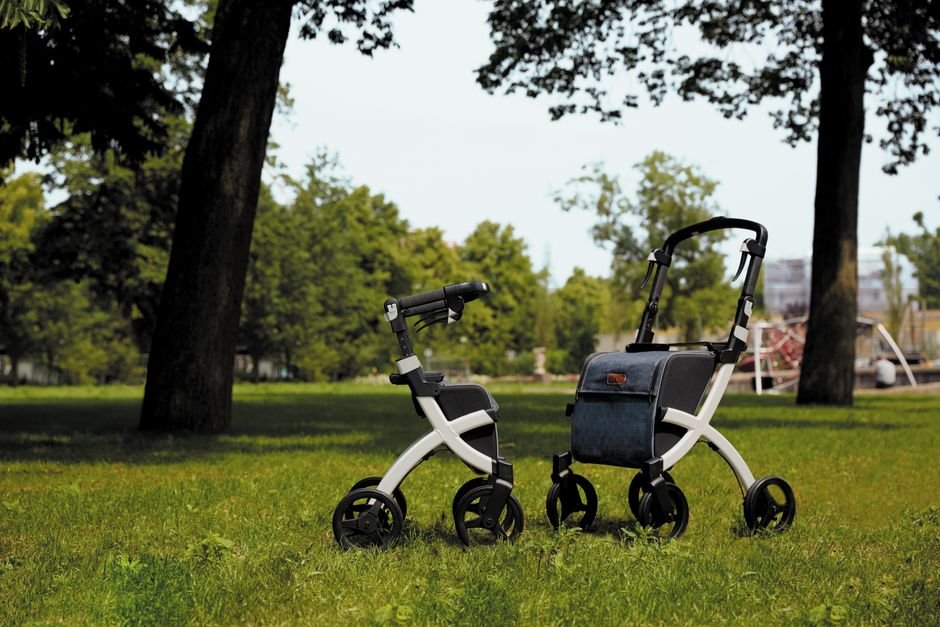
Safe use of any walking aid starts with correct fit and consistent technique. Handle height, brake control, and how well you manage doorways, thresholds, and uneven ground can all affect fall risk. Practicing on your own floors before relying on the device elsewhere is a useful early step.
Handle height should place the grip at approximately wrist level when you stand upright with your arms relaxed at your sides, allowing a slight bend at the elbows when you hold the handles. This height reduces shoulder strain and encourages an upright posture while walking. A physical therapist should confirm and adjust this measurement directly on your body, as general rules do not account for individual posture or limb proportions.
Rollator hand brakes require a confident, controlled squeeze to slow the device effectively. Limited hand strength or grip reduces braking reliability; discuss this with a clinician before using a rollator. Inadequate braking raises the risk of the rollator rolling unexpectedly, particularly on a slope. The parking brake lock must be engaged before sitting on the rollator seat; a seat used without locked brakes may move as you lower yourself, with no warning.
Test any new walking aid on your most common indoor routes before taking it outside. Check doorway widths, changes in floor surface, and any door thresholds that could catch wheels or tips. Outdoors, gravel, cobblestones, and steep kerbs present different challenges for each device type. A rollator generally handles outdoor surfaces more smoothly than a pick-up frame, but all devices need to be tested on the actual terrain the user walks regularly. For information on general mobility safety, the AAOS patient resources site offers guidance on orthopaedic health and fall prevention.
Professional fitting: how a therapist evaluates rollator vs walker options
A physical therapist evaluates how you actually walk, assesses your balance under real movement conditions, and reviews your home layout before recommending a walking aid. That process covers factors no comparison chart can capture.
During a walking aid assessment, a physical therapist typically examines how you stand, turn, and walk on different surfaces. They assess balance during movement, not just while standing still, and check whether your arms are strong and coordinated enough for the device under consideration. They may also review any weight-bearing instructions from your surgeon or doctor to ensure the device supports rather than conflicts with your recovery plan.
Fitting the device on your body involves adjusting handle height and testing it while you walk. But the fitting is only part of it: a therapist also shows you how to safely start and stop, navigate turns, manage thresholds and slopes, and use rollator brakes correctly. Without supervised practice, even a well-fitted device can be used in ways that increase rather than reduce fall risk, particularly in the first weeks of use.
An occupational therapist or physical therapist can also walk through your home with you to identify where the aid might catch, tip, or become difficult to manage. The home visit covers doorway widths, floor surface changes, the height of steps or kerbs at your front entrance, and outdoor routes you use regularly.
The Rehab on Wheels guide notes that a rollator requires the user to control both steering and braking and recommends professional assessment to match the amount and type of support to the user’s actual needs. Professional assessment is especially important when choosing a walking aid for balance problems, where the gap between device types is widest.
Tip: Bring your walking aid to your physical therapy appointment so the therapist can measure and adjust it while you are present. Adjustments made on a different person or on a table are rarely accurate for your body.
When to See a Doctor About Your Walking Aid
A change in your mobility or a new medical event can quickly make a previously suitable walking aid the wrong choice. Knowing when to seek clinical input, rather than adapting to a device that may no longer fit your needs, matters for anyone whose mobility is in flux.
See a doctor or physical therapist soon if:
- You have had a recent fall, even if you were not injured.
- Your balance, strength, or walking pattern has changed since your last medical review.
- Using your current walking aid causes pain, numbness, or increases your fatigue noticeably.
- You are unsure whether your device is the right type for your current condition or surgery.
- Your device feels unstable, is difficult to control, or no longer fits your height comfortably.
Seek emergency care if:
- You fall and cannot get up, have severe pain, or cannot bear weight on a limb.
- You experience sudden weakness, dizziness, or loss of sensation in your legs during or after using your walking aid.
- You have chest pain or breathlessness during physical activity with your walking aid.
Key Takeaways
- The rollator vs walker choice should reflect your balance, strength, fatigue level, and home environment before any other factor is considered.
- A pick-up walker gives the highest stability; a two-wheeled walker reduces lifting effort while adding natural speed control; a four-wheel rollator allows continuous movement with hand-brake control.
- Always engage the rollator’s parking brakes fully before sitting on its seat.
- Cognitive readiness matters: managing rollator steering and brakes at the same time as walking requires dual-task thinking that not everyone finds easy.
- After surgery or a fall, ask a clinician to reassess which device now matches your current weight-bearing instructions and strength.
- A physical therapist can fit the device to your body, teach safe technique for your real-world routes, and reduce fall risk before you use the aid independently.
The choice between a pick-up frame, a two-wheeled walker, and a four-wheel rollator should come from how your body moves right now and from your doctor’s or therapist’s specific guidance. The right device is a clinical match, not a product preference.
These devices exist to extend what you can do, not just to reduce fall risk. Finding the right one with a therapist who watches how you actually move is the most direct route to that goal. Getting that professional input early, rather than after a problem appears, is what makes the difference between a walking aid that works for you and one you are working around.
Frequently Asked Questions
- What is the main difference between a rollator and a standard walker?
- A standard pick-up walker is lifted and placed forward with each step, giving maximum stability on smooth surfaces. A rollator moves on four wheels and is steered with hand brakes. The rollator suits people who have reasonable balance but tire quickly, while the standard walker suits those who need very firm, predictable support.
- Is a rollator or a walker better for balance problems?
- A good starting point for significant balance difficulty is a pick-up walker or a two-wheeled walker, since both stay in place when you lean on them. A rollator can drift forward if grip is lost, so it works better for people whose balance is fairly steady and who mainly need endurance support or a rest seat. A physical therapist can assess this directly.
- Can you lean on a rollator for support?
- A rollator is built to roll, not to hold your full body weight the way a fixed frame does. Pushing the handles lightly as you walk is fine, but pressing down heavily may cause the device to glide forward without warning. Use the seat only after parking brakes are clicked firmly into the locked position on a flat, stable surface.
- Is a two-wheeled walker a good compromise between a standard walker and a rollator?
- For many users, the two-wheeled model bridges the gap effectively. Front wheels allow the frame to glide forward with less effort than a full lift, while rear tips drag against the floor to limit speed naturally and without hand controls. It tends to work well when balance still needs more containment than a freely-rolling rollator provides.
- How should a physical therapist help me choose and fit a walking aid?
- A thorough gait and balance evaluation comes first, covering your walking pattern, strength, coordination, and any weight-bearing restrictions from your doctor. The therapist then adjusts handle height while you are standing, demonstrates safe brake technique on a rollator, and practices real-life maneuvers including turns and threshold crossing with you before you go home independently.
This article is for informational purposes only and does not replace professional medical advice. Always consult your doctor before starting any treatment.