
Quick Summary
- A knee brace can ease pain and help you continue light activity during recovery, but it works only as part of a broader plan that includes strength training and smarter load management.
- The brace type must match your diagnosis: compression sleeves and patellar straps for runner’s knee, hinged braces for instability, and unloader braces for osteoarthritis.
- Wearing a brace for too long without doing strengthening exercises can gradually weaken the muscles surrounding the knee.
- Swelling, locking, giving way, or sharp worsening pain are red flags that call for a doctor visit, not a stronger brace.
- Non-weight-bearing cardio such as cycling or swimming keeps your fitness intact while the knee heals without adding joint stress.
A knee brace for running is a support device worn around the joint to reduce pain, improve stability, or control how the kneecap moves during activity. It doesn’t fix the source of pain; it manages symptoms while you address the root problem. For adult recreational runners in their 30s through 60s, who often also live with back stiffness, hip tightness, or other joint concerns, knee pain is rarely a single-cause issue. This guide draws on orthopedic evidence to help you match the right brace to your specific condition, use it safely, and recognize when self-care needs to give way to professional evaluation.
Running With Knee Pain: When a Brace Makes Sense
A knee brace is appropriate when symptoms are mild to moderate, swelling and instability are absent, and you have a working plan to address the underlying cause at the same time. It can provide enough temporary relief to let you continue light running during a recovery period, as long as it’s paired with strength exercises and sensible adjustments to training load. A brace used this way is a bridge tool, not a final answer.
The American Academy of Orthopaedic Surgeons states that braces can support injured or arthritic knees and help relieve pain, but they are not a cure and should be matched to the underlying condition. Self-selecting a brace based on appearance or price alone often misses the mark and can delay proper care.
Dull pain that fades after the first few minutes of a run, with no swelling or giving way, is often manageable with brace support and training adjustments. Sharp pain that arrives during or after a run, any visible joint swelling, or a knee that locks or buckles are signals to stop running and seek evaluation rather than adding a support device.
Runners in their 40s and 50s who also have back or hip issues need to be especially careful. Weakness in the hips or core often shifts extra load onto the knee, meaning the knee is absorbing the consequences of a problem located higher in the chain. A brace can ease knee discomfort in the short term, but it can’t correct a faulty movement pattern driven by weak glutes or a stiff lumbar spine.
Common Causes of Knee Pain in Runners and Why Diagnosis Matters
Patellofemoral pain syndrome, commonly called runner’s knee, is one of the most common running-related knee complaints in adults. It causes front-of-knee pain when the kneecap doesn’t track smoothly over the thigh bone during repetitive activities such as running, squatting, or stair climbing. But it’s far from the only one, and each diagnosis points to a different brace choice.
Mayo Clinic explains that patellofemoral pain is typically triggered by overuse and muscle imbalance, and that treatment includes activity modification, physical therapy, and sometimes bracing or taping to improve kneecap tracking. Knowing which structure in the knee is irritated guides every decision that follows, brace selection included.
- Runner’s knee (patellofemoral pain syndrome): Aching or burning pain at the front of the knee, often aggravated by hills, stairs, or sitting with knees bent for long periods.
- IT band syndrome: Sharp or burning pain on the outer edge of the knee, typically appearing at a consistent point in a run.
- Meniscal irritation or tear: Inner or outer knee pain, sometimes with a catching or locking sensation, often triggered by twisting or squatting movements.
- Early knee osteoarthritis: Diffuse, achy pain with stiffness after rest, most common in runners over 40.
- Patellar tendinopathy: Pain directly below the kneecap, described as a deep ache or tenderness when pressing on the tendon.
The MedlinePlus knee health guide states that symptoms including swelling, joint locking, instability, or inability to bear weight all warrant medical assessment, because they can signal structural damage that needs more than a brace. Choosing the wrong brace for an undiagnosed condition not only fails to help but can delay getting the right care.
Tip: Before buying any brace, note exactly where your pain is located (front, outer edge, inner edge, or below the kneecap), when during a run it appears, and whether the joint ever swells or feels unstable. This information helps a clinician guide you to the right device.
Types of Knee Braces for Runners and Which Conditions They Suit
The four main knee brace types for runners are compression sleeves, patellar straps, hinged functional braces, and unloader braces. Each is designed for a different problem: a bulkier or more expensive brace isn’t automatically better, and using the wrong type for an undiagnosed condition can do more harm than good.
| Brace Type | Best For | Key Benefit | Main Limitation |
|---|---|---|---|
| Compression sleeve | Mild general aching, minor swelling | Warmth and joint awareness | No structural support for instability |
| Patellar strap | Runner’s knee, patellar tendinopathy | Redirects kneecap pressure during activity | Narrow application; does not suit other diagnoses |
| Hinged functional brace | Ligament laxity, post-injury return to running | Medial and lateral stability | Heavier and warmer; can feel restrictive on long runs |
| Unloader brace | Medial or lateral compartment osteoarthritis | Shifts load away from the damaged compartment | Usually needs professional fitting; higher cost |
For runner’s knee specifically, the AAOS patellofemoral pain guide states that patellar stabilizing braces or taping may reduce pain when combined with load reduction and quadriceps and hip strengthening. A simple patellar strap, worn just below the kneecap over the patellar tendon, is often the first device recommended before moving to a full sleeve.
For osteoarthritis, published clinical research suggests unloader braces may reduce pain and improve function in medial compartment knee osteoarthritis. The same research notes that adherence can be a challenge and that bracing works best when combined with strengthening and weight management strategies.
Elastic compression wraps and taping techniques, such as McConnell taping for patellofemoral pain, can be effective short-term complements to a brace. Shoe inserts or custom orthotics may also be recommended by a physiotherapist when foot alignment contributes to knee stress. Off-the-shelf sleeves and patellar straps are generally adequate for mild to moderate pain during a supervised recovery period.
Tip: Custom or semi-custom braces are typically reserved for significant instability, confirmed ligament damage, or advanced osteoarthritis diagnosed by a clinician. Most recreational runners do well with an off-the-shelf option that fits properly.
How to Use a Knee Brace Safely While Running
A knee brace should fit snugly without restricting circulation or causing numbness below the knee, and stay in place during movement without rolling or bunching. A correct fit reduces skin irritation and ensures the device can do its job; an ill-fitting brace that slides down the leg within the first kilometer provides no meaningful support.
Most braces are intended for use during activity, not all day. Wearing a brace during your run and removing it afterward is the standard approach for recreational runners. Continuous all-day use, particularly with a compression sleeve, limits the strengthening stimulus the muscles around the knee need to recover.
For a patellar strap, position it directly below the kneecap, centered over the patellar tendon. For a sleeve with a kneecap opening, confirm the opening sits squarely over the kneecap before you begin. After the first few minutes of running, stop briefly to confirm the brace hasn’t shifted. If you notice any numbness, tingling, increased pain, or skin redness after use, remove the device and reassess the fit before continuing.
Orthopedic guidance consistently treats bracing as a phase of recovery, not a permanent arrangement. A common approach is to use the brace during runs for several weeks while working on strength, then gradually reduce reliance on it as the knee becomes more stable on its own. If pain returns the moment you remove the brace, the underlying problem hasn’t been resolved yet.
Tip: Wash your knee sleeve or brace regularly according to the manufacturer’s instructions. A damp, unwashed brace against the skin during long runs can cause irritation and increases the risk of skin problems around the knee.
Beyond the Brace: Strength, Technique, and Load Management for Long-Term Relief
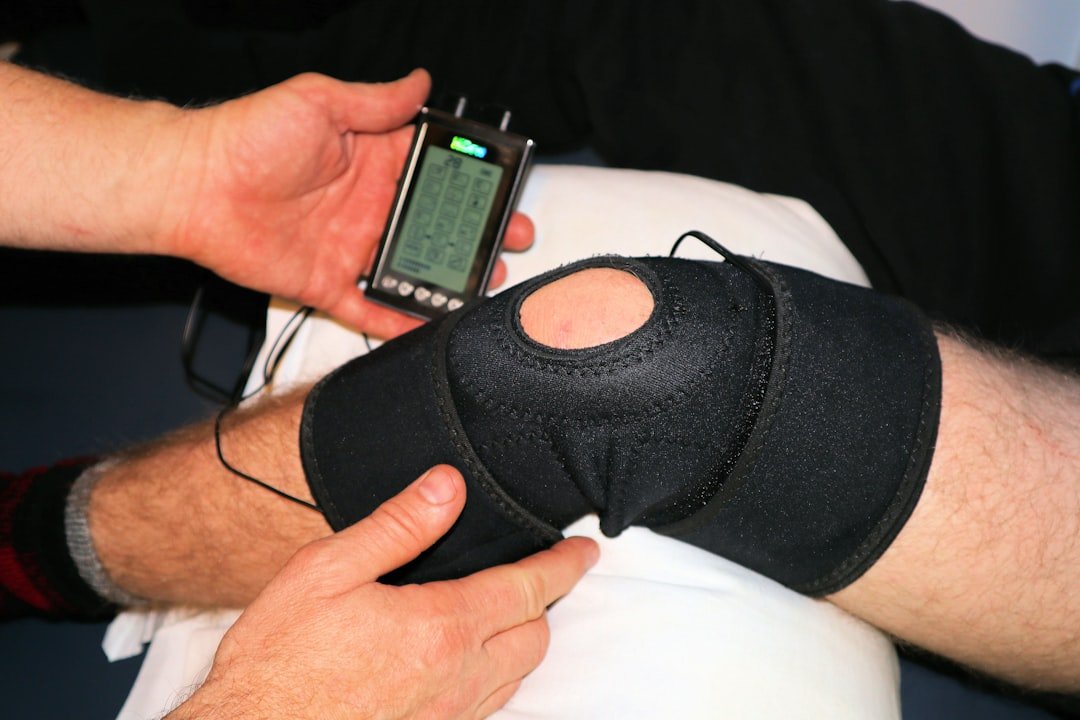
A knee brace is one component of a recovery plan, not the plan itself. The quadriceps, hip abductors, and glutes are the most important long-term stabilizers of the knee joint, and no brace compensates fully for a muscle that isn’t doing its job. When these muscles are weak or fatigued, the knee absorbs forces it wasn’t designed to handle, and pain follows.
A brace or support may provide temporary symptom relief for some running-related knee conditions, but it rarely addresses all contributing factors. It is one part of a broader programme that includes strength work, load management, and movement assessment, not a stand-alone fix.
Reducing weekly running volume during the initial recovery phase, then reintroducing mileage gradually while using a brace or patellar strap during return-to-run sessions, is a widely followed approach in sports medicine practice. Trying to run through full training loads while relying on a brace to mask pain generally prolongs recovery.
When the knee can’t tolerate running at all, non-weight-bearing cardio keeps aerobic fitness intact without adding joint stress. A stationary bike, swimming laps, or aqua jogging in a pool are practical alternatives that most adult runners can access. These options let you maintain conditioning through the rest period so you’re not starting from scratch when you lace up again.
Running technique also reduces knee stress without any equipment. A shorter stride with a slightly higher cadence reduces the impact load through the knee on each footfall. Cutting back on aggressive heel-striking on downhills, where knee forces are highest, and strengthening the hip abductors to prevent inward knee collapse during stance cost nothing.
Tip: If you have back or hip pain alongside knee pain, ask a physiotherapist to assess your full movement pattern before buying a knee brace. The knee pain may partly be a consequence of stiffness or weakness located higher in the chain, and addressing that is faster and more effective than bracing the knee alone.
When to Stop Running and Seek Specialist Care
Stop running and seek specialist care when the knee gives way, locks, swells visibly and does not settle quickly, or fails to improve after several weeks of self-care and bracing. These symptoms signal structural damage that needs medical evaluation before any more running takes place. No brace is a safe substitute for a proper diagnosis when red flags are present.
See a doctor soon (within a few days):
- Pain that is getting worse over time despite rest and brace use.
- Visible swelling that does not settle within a day or two.
- A catching or locking sensation when bending or straightening the knee.
- Persistent pain during everyday activities like walking or climbing stairs.
- Symptoms that have not improved after several weeks of self-care and bracing.
Seek emergency or same-day care:
- Sudden severe knee pain following a fall, twist, or collision.
- A knee that gives way and you cannot bear weight on it.
- Visible deformity or a loud pop at the moment of injury.
- Redness, warmth, and fever around the joint, which may indicate infection.
Johns Hopkins Medicine states that self-care for knee pain may include rest, ice, compression, bracing, and strength exercises, but emphasizes that an accurate diagnosis comes first. For confirmed meniscal or cartilage damage, specialists typically recommend avoiding weight-bearing activities such as running until the knee has been properly assessed and a rehabilitation plan is in place.
Key Takeaways
- Match the brace to your diagnosis before you buy anything. A patellar strap for runner’s knee, a hinged brace for instability, and an unloader brace for osteoarthritis each target a different problem.
- Plan to gradually taper off brace use over the coming weeks as the muscles around your knee grow stronger and more capable of doing the job on their own.
- Begin strengthening exercises early in your recovery, alongside brace use, rather than waiting until you feel pain-free.
- Reduce running volume during the initial recovery period, then reintroduce mileage gradually as symptoms allow rather than returning to full training all at once.
- Stop running immediately if the knee gives way, locks, or swells sharply. These are signals for medical evaluation, not a reason to find a stronger brace.
- Use non-weight-bearing cardio throughout any rest period to maintain aerobic fitness and make the eventual return to running significantly easier.
Conclusion
For many adult recreational runners, a well-chosen knee brace used correctly and for an appropriate length of time is a genuinely useful part of getting back to running. The key is treating it as one component of a larger plan rather than expecting the brace to solve the problem on its own.
Identify which structure in your knee is causing the pain before you buy anything. Match the brace to your specific diagnosis, use it during activity rather than all day, and pair it with the strength and flexibility work that addresses the root of the issue. Keep the warning signs in this guide in mind and get a medical opinion if symptoms point to something more serious.
The goal of every recovery is a knee that’s stronger and more resilient than before, one that gradually trades the brace for its own muscle. That outcome is realistic for most runners who take a patient, structured approach. A brace gets you through the difficult weeks while your body does the real work of recovery.
Frequently Asked Questions
Can a knee brace alone fix my running-related knee pain, or do I still need exercises and rehab?
A knee brace is a support tool, not a cure. It can reduce pain and help you stay active during recovery, but it works best alongside targeted exercises, load management, and when needed, professional guidance. Bracing without addressing underlying muscle weakness or movement problems rarely leads to lasting relief.
Which knee brace is best for patellofemoral pain (runner’s knee) versus meniscus or arthritis pain?
For runner’s knee, a patellar strap or compression sleeve that supports kneecap tracking is commonly recommended. For meniscus pain, a hinged functional brace offers more stability. For osteoarthritis, an unloader brace shifts weight away from the damaged compartment. Getting a diagnosis first is essential for choosing correctly.
Is it safe to run with a knee brace if my knee sometimes feels unstable or gives way?
No. A knee that gives way during activity suggests a structural problem that bracing alone can’t safely manage. Instability is a red flag requiring prompt medical evaluation. Running on an unstable knee raises the risk of further injury, even when a brace is worn during every session.
Can wearing a knee brace too often cause muscle weakness or dependency?
Yes, extended brace use without active strengthening can reduce how hard the surrounding muscles work, which may gradually weaken them. Most orthopedic guidance recommends combining brace use with targeted strength exercises and tapering off the brace progressively as the knee becomes more stable on its own.
When should I stop trying braces on my own and see an orthopedic specialist for knee pain?
See a specialist if pain is sharp or worsening, if visible swelling doesn’t settle within 48 hours, if the knee locks or gives way, if you can’t bear full weight, or if 4 to 6 weeks of self-care and bracing has not led to any improvement.
This article is for informational purposes only and does not replace professional medical advice. Always consult your doctor before starting any treatment.