

Quick Summary
- A carpal tunnel brace holds the wrist in a neutral position, which may reduce pressure on the median nerve during sleep and at the keyboard.
- Rigid or semi-rigid night splints provide firm positional control during sleep; flexible daytime supports allow more finger movement for typing and mouse work.
- Splinting evidence is uncertain, so wear a brace as one part of a broader self-management plan rather than expecting it to resolve the condition on its own.
- Fit matters: measure your wrist, use the manufacturer’s sizing chart, and remove the brace promptly if tingling increases, swelling appears, or skin pressure marks develop.
- Seek a clinical assessment if symptoms do not improve after several weeks of consistent brace use, or if weakness, constant numbness, or difficulty with fine grip develops.
A carpal tunnel brace is a conservative, low-cost option that holds the wrist in a neutral position to reduce pressure on the median nerve during sleep and at the keyboard. Carpal tunnel syndrome occurs when the median nerve, which runs from the forearm through the carpal tunnel (a narrow channel at the base of the palm) into the hand, becomes compressed. This guide covers which symptoms a brace may ease, what current evidence says about splinting, how to choose and fit the right support for keyboard use, and when to stop self-managing and see a clinician.
What Carpal Tunnel Symptoms Can a Carpal Tunnel Brace Address?
A carpal tunnel brace works best for specific, recognizable symptoms caused by median nerve compression at the wrist. Knowing which symptoms respond to positional support, and which do not, sets realistic expectations before you invest in one.
The classic symptoms of carpal tunnel syndrome are tingling, numbness, and a burning sensation in the thumb, index finger, middle finger, and the thumb-side half of the ring finger. These are the fingers supplied by the median nerve. Symptoms most often appear at night or first thing in the morning, because the wrist naturally flexes or extends during sleep, raising pressure inside the carpal tunnel. Waking repeatedly and shaking the hands to restore feeling is one of the most common reasons desk workers reach for a wrist support.
A carpal tunnel brace is less likely to relieve symptoms caused by other conditions that can mimic carpal tunnel syndrome, including cervical nerve root compression in the neck, thoracic outlet syndrome, or peripheral neuropathy related to diabetes. AAOS patient guidance describes bracing as one conservative option within a broader set of nonsurgical approaches, not a standalone remedy. If numbness affects both hands equally, involves the little finger, or travels up into the forearm and shoulder, a clinical assessment is more appropriate than self-selecting a brace.
Weakness in the thumb, difficulty pinching small objects, or visible flattening of the muscle pad at the base of the thumb (thenar wasting) are signs of significant nerve involvement. These findings go beyond what a wrist brace can address and require clinical evaluation rather than continued self-management.
How a Carpal Tunnel Brace Works and What the Evidence Says
A carpal tunnel brace reduces pressure on the median nerve by holding the wrist in a neutral or near-neutral position, preventing the sharp bending in either direction that raises pressure inside the carpal tunnel. This positional control is most relevant during the prolonged stillness of sleep.
The 2023 Cochrane review titled “Splinting for carpal tunnel syndrome,” published in Cochrane Database of Systematic Reviews (2(2), CD010003, DOI 10.1002/14651858.CD010003.pub2), pooled six studies with 306 participants comparing splinting against no active treatment for short-term symptoms. The pooled estimate was a 0.37-point improvement on a 1-to-5 symptom scale, but the confidence interval ranged from 0.82 points better to 0.08 points worse. The certainty of evidence was rated low, meaning the actual benefit could be much smaller than that average estimate, or could be absent entirely.
For short-term hand function, the same Cochrane review found moderate-certainty evidence that splinting probably does not produce a meaningful difference compared with no active treatment. Long-term data, drawn from two studies with 144 participants, was rated very low certainty, so reliable conclusions about lasting benefit cannot be drawn from current evidence. Some individuals may notice genuine relief while others may not, and the research cannot predict who will respond.
Some biomechanical research suggests lower wrist extension and reduced carpal tunnel pressure when typing with wrist supports compared to typing unsupported. This mechanical observation for desk workers is worth noting alongside the broader symptom evidence, which remains uncertain. A brace is a management tool, not a treatment that corrects the underlying anatomy of the carpal tunnel.
How to Choose a Carpal Tunnel Brace for Desk Work
Two broad categories of carpal tunnel brace suit desk workers: rigid or semi-rigid night splints, and flexible daytime wrist supports. Choosing between them depends on when you plan to wear the brace and how much wrist movement your work requires.
A rigid or semi-rigid night splint contains a metal or hard plastic stay along the palm side of the wrist. It prevents both flexion and extension firmly, holding the wrist in one position throughout the night. This type is not intended for use while typing, because it eliminates the small wrist adjustments that active keyboard work naturally involves. Put it on just before bed and remove it in the morning.
A flexible daytime support uses elasticated fabric and sometimes a softer inner stay. It guides the wrist toward neutral without locking it in place, allowing the small movements needed for keyboard and mouse work. The trade-off is less positional control than a rigid splint, but greater tolerance for all-day wear. Some desk workers use both: a rigid splint at night and a flexible support during desk sessions.
Measure your wrist circumference with a flexible tape at the narrowest point just above the wrist bones, then match the measurement to the manufacturer’s sizing chart for the specific product you are considering. A brace that is too large provides inconsistent positioning; one that is too small risks restricting circulation.
Look for adjustable straps to fine-tune fit as swelling changes through the day, and a washable inner lining for comfortable extended use. A 2024 review in Disability and Rehabilitation (see linked reference for full details) looked at wrist orthoses for carpal tunnel pain management over a six-month follow-up. That longer observation window is worth raising with a clinician when deciding which support type suits your situation.
How to Fit and Wear Your Wrist Brace Safely
A well-fitted carpal tunnel brace sits flat against the skin, holds the wrist in neutral, and does not cause new symptoms or skin discomfort during wear. An incorrectly fitted brace is one of the most common reasons people stop using one after a few days.
Fitting Your Carpal Tunnel Brace Step by Step
Place your palm flat on a table with your wrist relaxed. Slide the brace over your hand so that any rigid stay runs along the inner (palm side) surface of the wrist. The lower edge of the stay should sit at the crease of the wrist, not across the palm itself. Fasten the straps from the wrist upward toward the forearm, checking after each one that you can still slide one finger underneath without force.
Once fastened, flex your fingers to check that you can form a loose fist. If you cannot, the brace is positioned too far up onto the palm or the straps are too tight. After wearing it for the first hour, remove it and inspect your skin. Marks that last more than ten to fifteen minutes after removal indicate that a strap or edge is pressing too hard on that spot and the fit needs adjustment.
Remove the brace promptly if you notice any of these warning signs during wear:
- Tingling or pins-and-needles that increase after putting the brace on.
- Swelling in the fingers or above the brace edge.
- Skin redness, chafing, or pressure sores at strap contact points.
- New pain in the wrist or forearm that was not present before.
For nighttime use, some people remove the brace during sleep in the first week without realizing it. Wearing it consistently over several weeks, as tolerated, is generally needed to notice whether it reduces nighttime symptoms. Don’t write it off after a few nights.
Tip: Keep a brief symptom diary. Note how many times you wake with numbness, whether the brace was on or off when it happened, and any new skin reactions. This record gives your clinician accurate information when assessing your progress and deciding on next steps.
Desk Setup Habits That May Improve Wrist Comfort
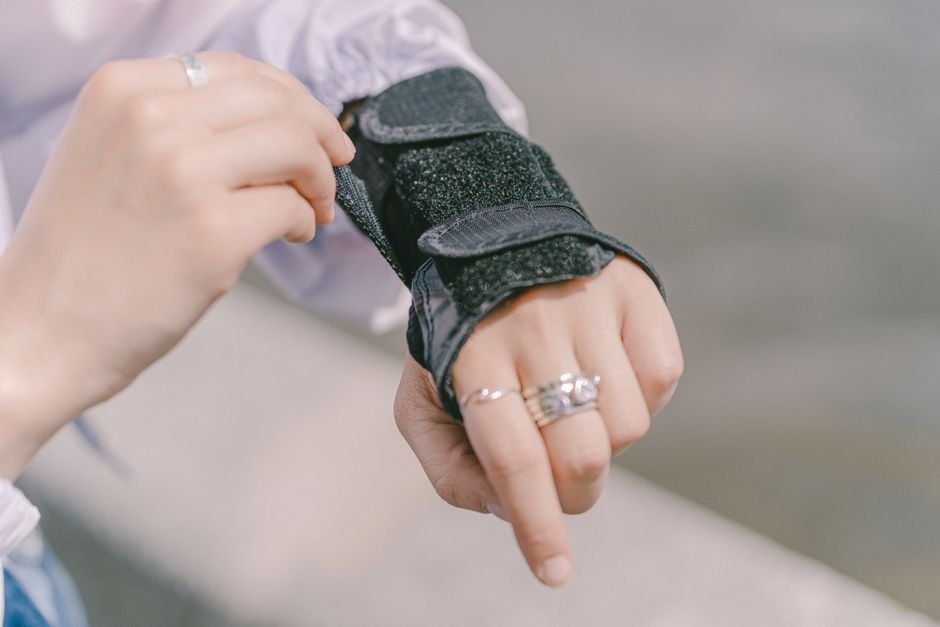
Your desk setup determines how much strain lands on the wrist during the hours you’re not in a brace. Maintaining a neutral wrist posture at the keyboard complements brace use, and a few adjustments can make a real difference.
Your keyboard height should allow your elbows to rest roughly at a right angle, with your forearms close to parallel with the floor. Wrists bent upward to reach the keys indicate the keyboard is too high. A wrist rest placed at the edge of the desk can support the forearm during pauses between typing bursts, but pressing the base of the palm against a hard edge while fingers are actively moving increases pressure directly over the carpal tunnel.
Mouse placement also affects wrist load. Reaching far out to the side of the keyboard forces the wrist into ulnar deviation (a sideways tilt away from the thumb). Keeping the mouse directly beside the keyboard reduces this angle. Light keystrokes and a relaxed grip on the mouse reduce sustained muscle tension during long work sessions.
Short, regular breaks interrupt sustained postures. Standing up, shaking your hands gently, and moving your fingers for a minute or two gives the tissues time to recover between long typing blocks. These habits support wrist comfort whether or not you use a brace during the day.
The relationship between keyboard use alone and carpal tunnel syndrome is not fully settled in clinical research. Neutral wrist habits are supported as a comfort and strain-reduction measure. No current evidence supports claiming that a specific desk habit prevents carpal tunnel syndrome from developing, so keep the goal modest: reducing daily wrist load and maintaining comfortable posture.
Tip: Check your monitor height as well. Looking down at a screen positioned too low tilts the neck forward, which can affect nerve tension along the whole arm from the neck to the fingertips and may add to hand symptoms.
When to Stop Self-Care and Seek Medical Advice
Stop self-managing with a brace and seek clinical assessment when symptoms do not improve after several weeks of consistent wear, when they are worsening, or when features appear that go beyond what positional wrist support can address. A brace is a reasonable first step for mild, intermittent symptoms that follow a clear pattern, such as nighttime numbness that settles after shaking the hands in the morning. It is not a substitute for a diagnosis.
A clinician can confirm whether carpal tunnel syndrome is actually the cause of your symptoms through physical examination and, when needed, nerve conduction studies. Other conditions that produce similar sensations, including cervical disc disease, thoracic outlet syndrome, and diabetes-related neuropathy, need their own specific management and will not respond to wrist splinting.
According to Mayo Clinic, carpal tunnel syndrome that progresses without adequate treatment can cause permanent nerve damage over time. Weakness in the hand, difficulty with fine motor tasks such as fastening buttons, and visible shrinkage of the thumb muscle pad are signs that the nerve is significantly affected. Mayo Clinic lists the condition among those where timely treatment produces better long-term outcomes than delayed intervention, which is why early evaluation matters when symptoms are getting worse.
- Symptoms have not improved after several weeks of consistent brace use.
- Numbness or tingling is constant throughout the day, not only at night.
- Both hands are equally affected, or symptoms involve the little finger.
- Pain or numbness extends up into the forearm or shoulder.
- You notice weakness or find yourself dropping objects unexpectedly.
- You suddenly lose grip strength or cannot move your fingers normally.
- Sudden severe swelling, discoloration, or loss of sensation develops in the hand after an injury or fall.
Key Takeaways
- A carpal tunnel brace holds the wrist in a neutral position to reduce median nerve pressure during sleep or desk work, and works best as one part of a broader self-management plan rather than as a standalone solution.
- The best available evidence for splinting is low-certainty for short-term symptom benefit and very uncertain for long-term outcomes, so treat brace use as a time-limited trial measure rather than a definitive remedy.
- Night splints lock the wrist in a neutral position throughout sleep, while softer daytime supports guide wrist posture without restricting the finger movement needed for keyboard and mouse tasks.
- Measure your wrist circumference, match it to the manufacturer’s sizing chart, and check that each strap allows one finger underneath; remove the brace promptly if tingling worsens, swelling appears, or skin pressure marks develop.
- Neutral keyboard height, keeping the mouse close to the keyboard, and regular short breaks throughout the day complement brace use and reduce cumulative wrist load.
- See a clinician if symptoms do not improve after several consistent weeks of brace use, or if weakness, constant numbness, or difficulty with fine grip tasks develops.
Conclusion
A carpal tunnel brace is a practical starting point for desk workers whose main complaints are nighttime waking and morning stiffness. The first few weeks of consistent, correctly fitted brace wear are a useful personal test: if nighttime waking reduces, the positional support is contributing something. If it doesn’t improve, that result is equally useful information to bring to a clinical appointment.
A brace cannot replace a clinical diagnosis, reverse existing nerve damage, or confirm that carpal tunnel syndrome is the cause of your symptoms. Pairing brace use with desk adjustments (keyboard at elbow height, mouse close to the body, regular movement breaks) gives your wrist the best chance to settle without placing all your hope in one product. Many people find that combining positional support with better desk habits and careful monitoring is enough to keep mild symptoms manageable.
Tracking symptoms in a diary and acting on signs of progression rather than waiting are habits that protect long-term nerve health. A well-chosen, well-fitted brace is a worthwhile first step, and so is knowing when to hand it over to a clinician who can examine the wrist properly.
Frequently Asked Questions
- Can a wrist brace help carpal tunnel symptoms while I work at a desk?
- A wrist brace can limit wrist bending at the keyboard, which may ease pressure on the median nerve. Some people report fewer symptoms with daytime use, though evidence for splinting is mixed. It works best as part of a plan that includes desk adjustments and, when needed, clinical advice.
- Should I wear a carpal tunnel brace during the day or at night?
- AAOS patient guidance highlights nighttime wear as a primary starting point, because a rigid splint stops the unconscious wrist bending that commonly triggers night symptoms. For desk work, a flexible support keeps the wrist out of extreme positions while still allowing enough finger movement for typing and mouse use.
- What position should my wrist be in inside a carpal tunnel splint?
- The goal is a neutral wrist position: straight, neither bent upward nor downward. AAOS patient guidance explains that this neutral alignment reduces pressure inside the carpal tunnel. Even a small tilt forward or backward counts as flexion or extension and can keep nerve irritation elevated during wear.
- How tight should a wrist brace for carpal tunnel be?
- A correctly fitted brace lets you slide one finger under each strap while still holding the support firmly. Remove it immediately if finger tingling worsens after fastening, or if you notice redness and pressure marks on the skin once you take it off.
- When should I see a clinician instead of continuing to use a wrist brace?
- A doctor visit makes sense if nighttime numbness is not improving after several weeks of consistent brace wear, or if weakness and dropping objects appear. When symptoms involve the little finger, affect both hands equally, or travel up the forearm, the cause may not be carpal tunnel syndrome.
This article is for informational purposes only and does not replace professional medical advice. Always consult your doctor before starting any treatment.